ARES Annual Report 2025



Overview of the ARES System
The ARES system is a user-friendly manuscript submission and peer review platform designed to optimize submission and review workflows for authors, editors, and reviewers, while providing publishers with a secure and efficient manuscript management environment. It consists of the ARES manuscript (ARES MS) system and the ARES review (ARES RE) system.
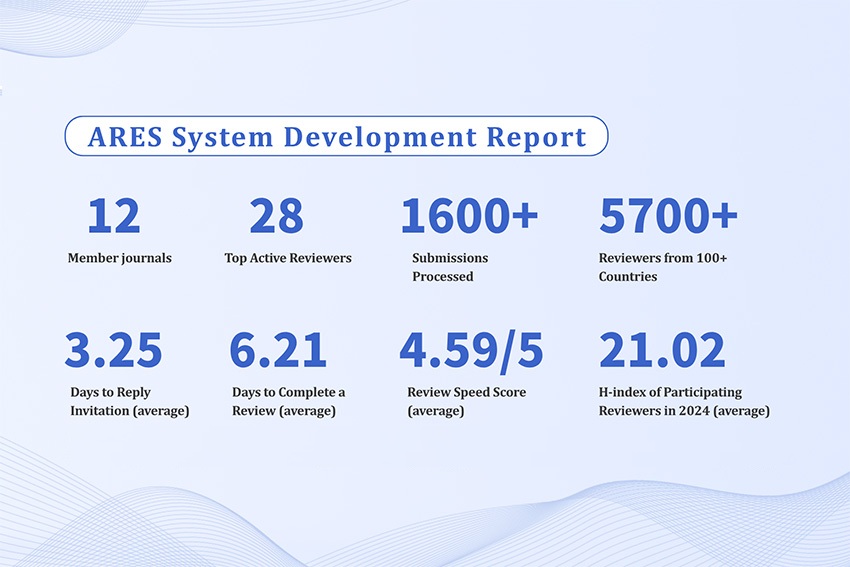
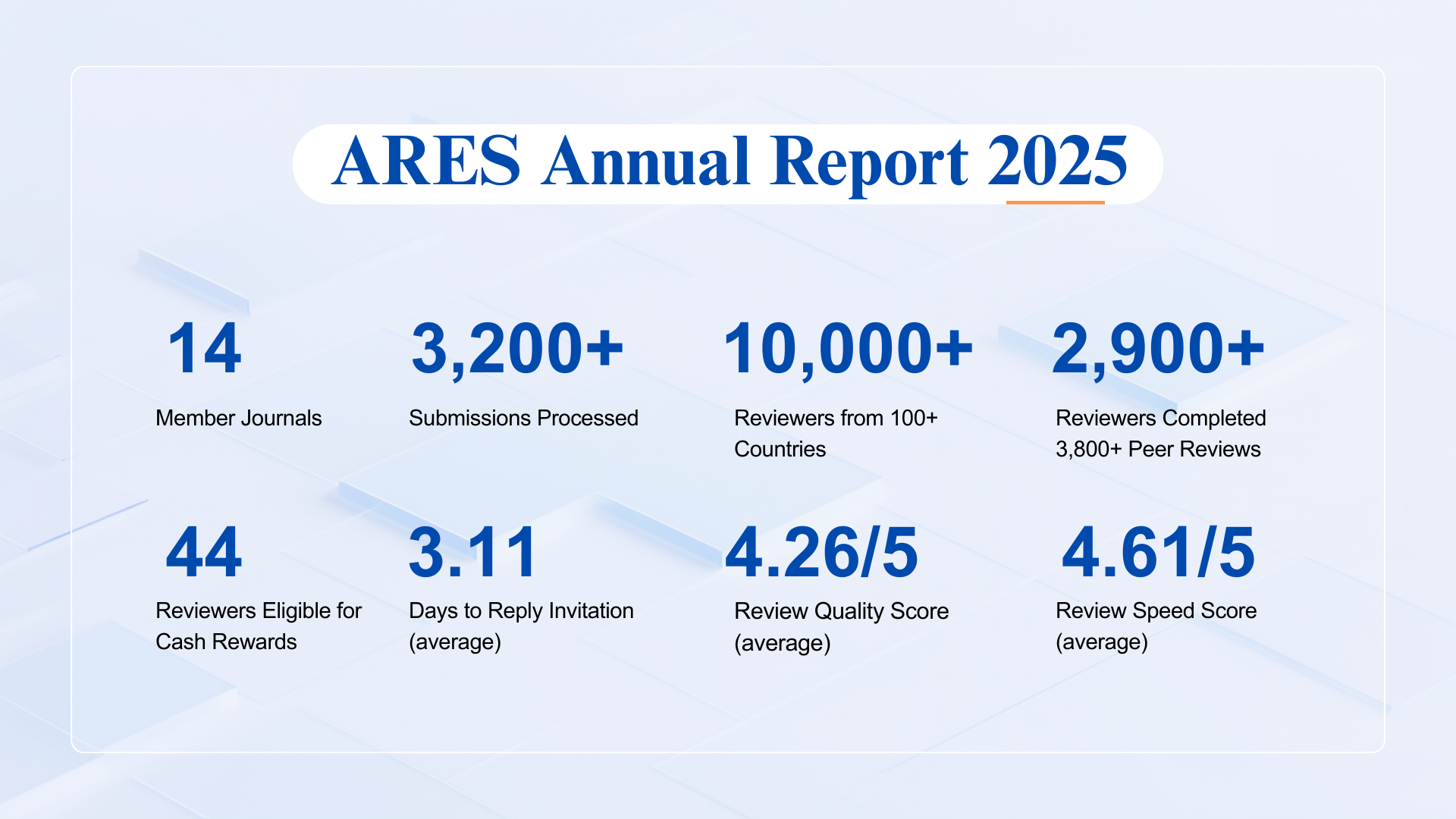
Since its launch in 2021, the ARES system has supported 14 member journals, processed over 3,200 manuscripts, and established a global reviewer community comprising more than 10,000 scholars. Through continuous optimization, ARES has addressed growing editorial demands by standardizing reviewer workflows, consolidating reviewer data, and promoting a transparent and consistent peer review process across participating journals.
In 2025, further enhancements focused on workflow optimization, system functionality, and reviewer database management. Improvements to reviewer registration, the reviewer system website, and database maintenance strengthened operational efficiency and delivered a more consistent user experience. These developments have laid a solid foundation for ARES’s sustainable growth and its ability to support expanding editorial needs.
Manuscript Handling Activity in 2025
In 2025, the ARES system maintained a stable overall operational scale, handling a total of 1,666 manuscript submissions throughout the year. In recent years, the system’s manuscript handling volume has evolved through distinct phases. Beginning with 166 manuscripts handled in 2022, the volume increased by 265% to 605 in 2023, followed by further growth to 820 manuscripts in 2024, representing a 36% increase.
By 2025, ARES experienced a substantial expansion in annual manuscript handling activity, with year-on-year growth reaching 103%. By the end of 2025, the ARES system had cumulatively handled more than 3,200 manuscript submissions in total.
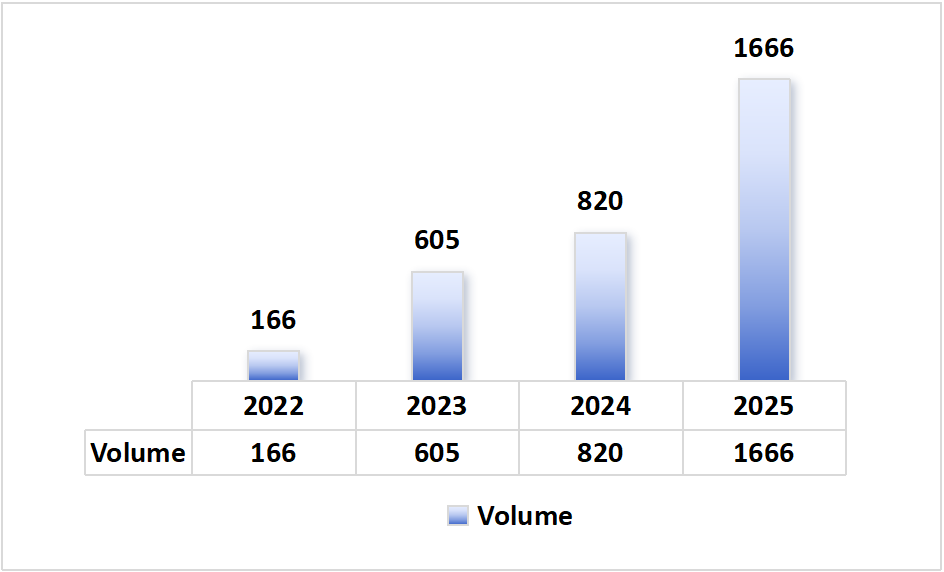
Figure 1. Annual Manuscript Processing Volume
Reviewer Network Development
Growth of Registered Reviewers
The ARES reviewer community has continued to expand steadily since its establishment. In 2025, the number of registered reviewers reached 6,654, reflecting a notable increase of 155% compared to the previous year. During the registration process, ARES conducts strict verification of reviewers’ information and academic qualifications. In 2025, the approval rate for registered reviewers was 80%.
Looking at the overall growth of the reviewer community, ARES had 644 registered reviewers in 2022. The following year, this figure rose to 2,066, representing a year-on-year growth of 221%. In 2024, the community further expanded to 2,609 reviewers, with a growth rate of 26%. The continued increase in registered reviewers through 2025 reflects the expanding reach of the ARES system and sustained interest among researchers worldwide in joining the reviewer community.
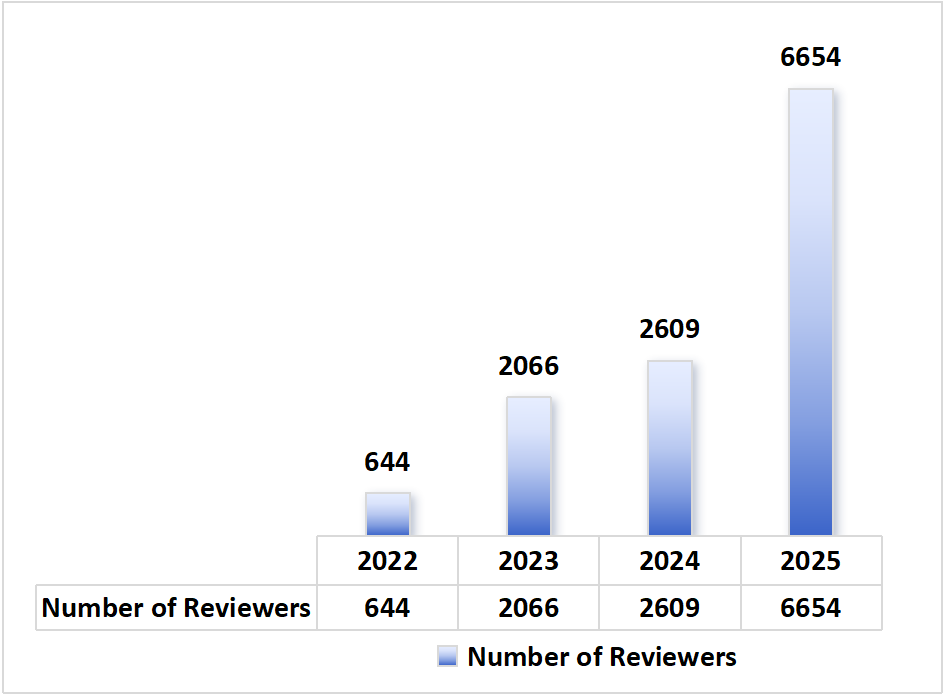
Figure 2. Annual Number of Registered Reviewers
International Distribution
In 2025, a total of 5,356 scholars passed verification and successfully joined the ARES reviewer community, with reviewers from China (19%), the United States (13%), and India (7%) ranking as the top three contributors. By the end of 2025, the system had successfully on-boarded 10,384 reviewers from more than 100 countries, including over 3,300 reviewers from China (16%), the United States (11%), and India (5%).
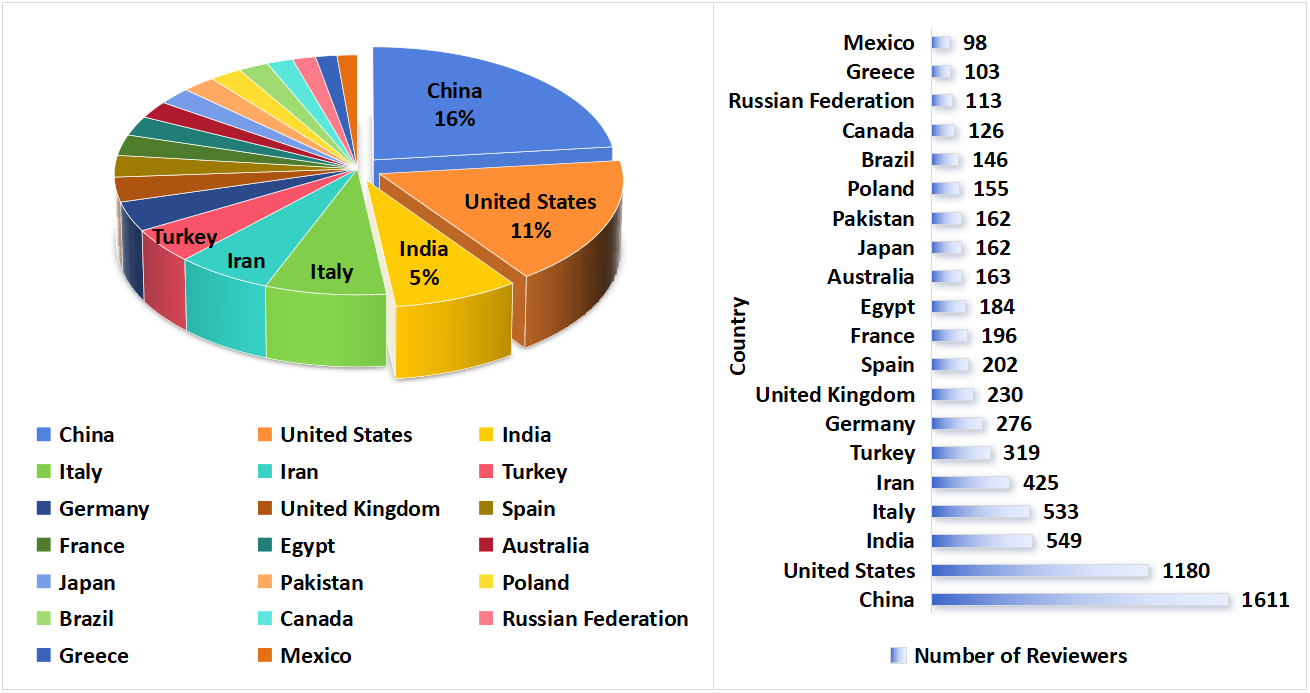
Figure 3. Country Distribution of Verified Reviewers: Top 20 Countries
Reviewer Engagement and Participation
Reviewer Invitation and Engagement
In 2025, ARES welcomed 5,356 new reviewers into its community. Of these, 3,800—representing 71%—were invited to review manuscripts, reflecting both the volume of submissions and the system’s capacity to match reviewers with relevant work. From this group, 1,082 reviewers have completed at least one peer review, accounting for 20% of the newly verified reviewers in the same year.
Since its launch, a total of 2,952 reviewers have actively participated and completed 3,882 peer reviews. Reviewers from China, the United States, and Italy represent the largest groups among those with recorded review activity, indicating sustained engagement from multiple regions.
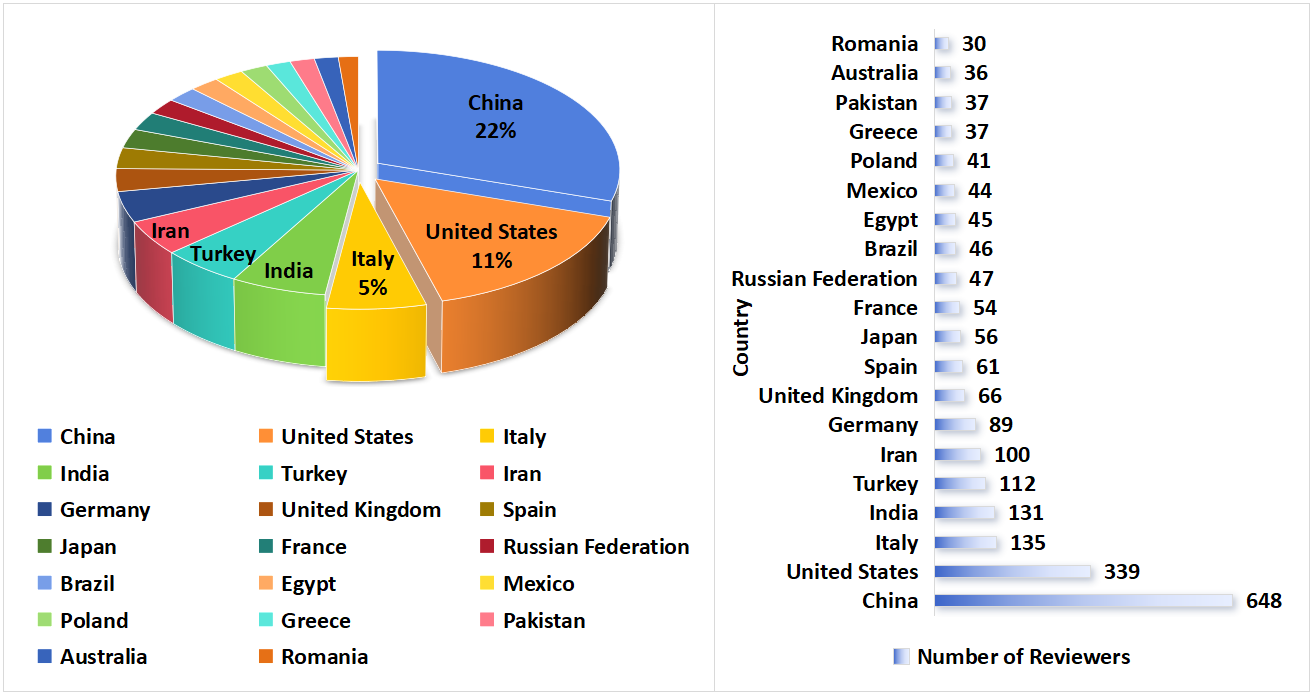
Figure 4. Country Distribution of Reviewer Engagement: Top 20 Countries
Active Reviewer Participation
Within the ARES system, a subset of reviewers has demonstrated sustained engagement by completing multiple manuscript reviews. As of the end of 2025, a total of 2,952 reviewers in the ARES system have completed one or more reviews, among whom 10 reviewers have completed 10 or more reviews. The most active reviewer has completed a total of 48 manuscript reviews. These reviewers contribute to the stability of peer review operations through sustained and consistent participation across multiple review tasks. Their participation plays an important role in maintaining stable review workflows and supporting the overall functioning of the peer review process within the ARES system.
Based on system records, the top 10 reviewers by number of reviews completed are presented below.
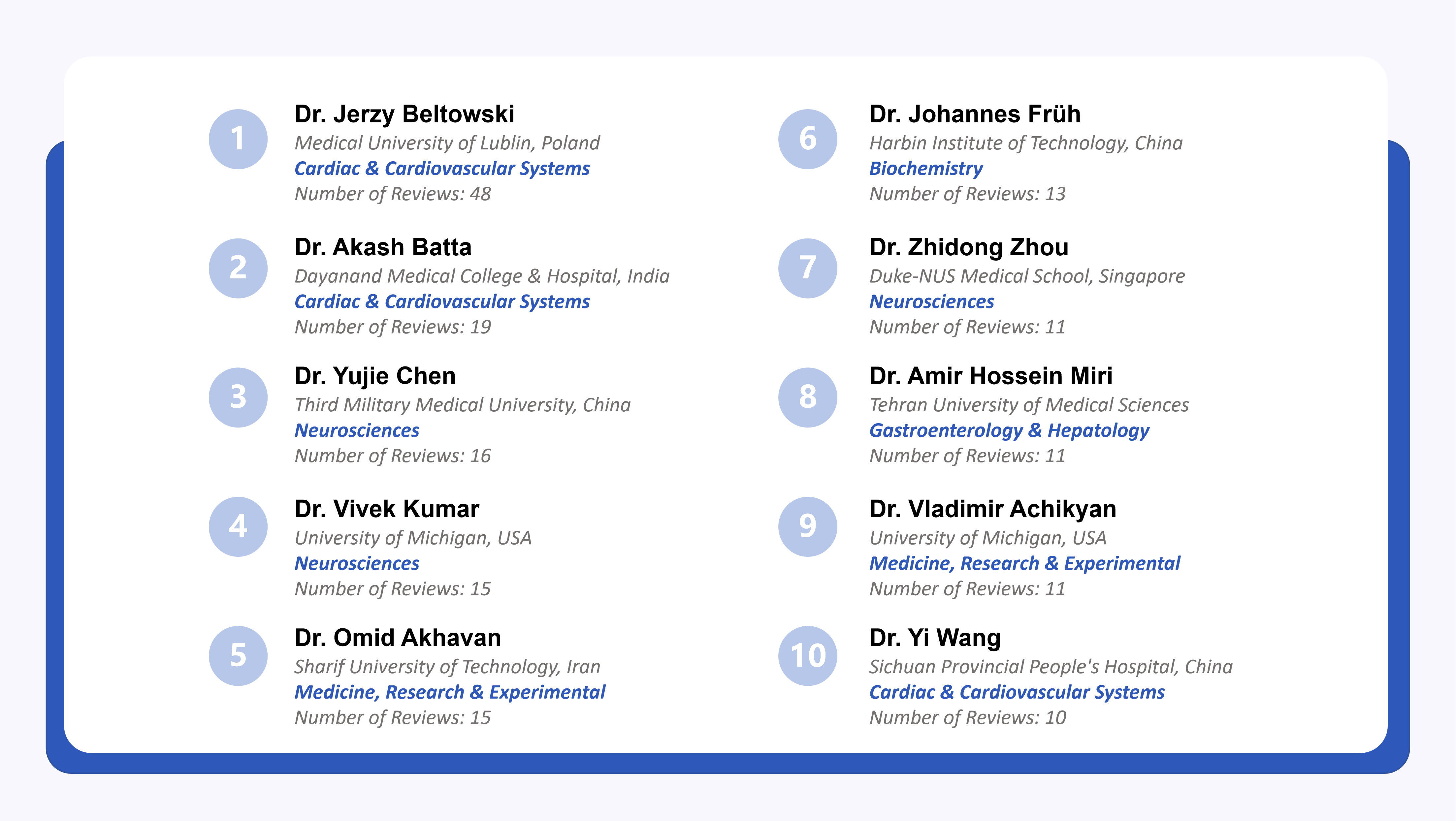
Figure 5. The Top 10 Reviewers by Number of Reviews
Peer Review Performance Indicators
Review Quality & Efficiency Metrics
As of December 2025, a cumulative total of 2,952 reviewers had participated in peer review tasks through ARES, collectively completing 3,882 review reports. Reviewer responsiveness and review timelines were measured using standardized definitions across journals:
Average Review Invitation Response Time: 3.11 days (from receipt to confirmation)
Average Review Report Completion Time: 5.86 days (from acceptance to submission)
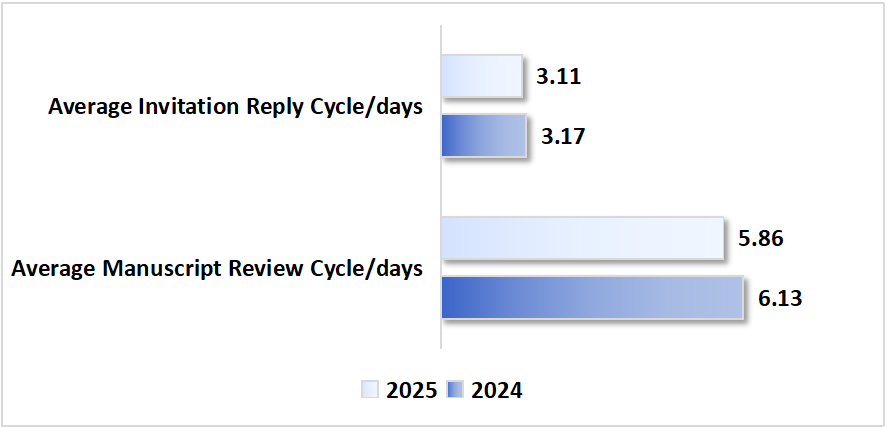
Figure 6. Review Cycle Efficiency
In addition to timeliness, ARES also systematically tracks review quality and speed through a standardized evaluation system:
Average Review Quality Score: 4.26/5
Average Review Speed Score: 4.61/5
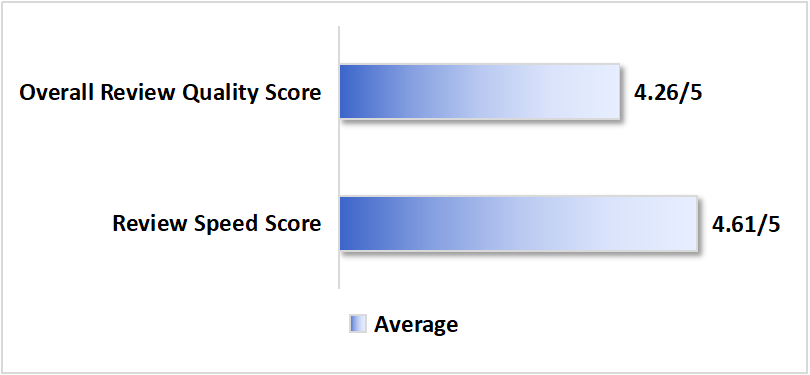
Figure 7. Review Speed & Quality Scores
All indicators presented here are based on review records from 2025 and summarized at the system level. Review quality and speed scores are generated within the ARES system based on predefined and uniformly applied assessment criteria. Taken together, these indicators describe a peer review process operating within a structured and standardized framework across journals, with consistent reviewer engagement and coordinated management of review activities.
Reviewer Recognition and Rewards
Reviewer Recognition Framework
ARES maintains a structured reviewer recognition and reward framework to acknowledge reviewers’ sustained engagement and to support the long-term stability of its peer review network.
Under this framework, reviewers accumulate points through completed review tasks. Once a reviewer reaches a threshold of 50 points, the points become eligible for redemption at a rate of 1 point = 1 USD. In addition, reviewers may receive APC discounts when submitting manuscripts to participating journals and can download official reviewer certificates for academic documentation and career records.
ARES operates in full alignment with international publication ethics. Editorial decisions remain independent and are based solely on academic merit, and reviewer recognition mechanisms are implemented separately from editorial decision-making to acknowledge reviewers’ voluntary contributions.
Reward-Eligible Reviewers
Reviewers who have accumulated 50 points or more form a distinct group within the ARES reviewer community. Their continued participation reflects sustained engagement with the peer review process. In accordance with the ARES reward policy, these reviewers are eligible to submit point redemption requests and receive corresponding rewards. This mechanism helps encourage stable reviewer participation and long-term collaboration within the ARES system.
ARES sincerely thanks these reviewers for their consistent contributions and professional commitment. We also encourage more reviewers to participate actively in the review process, contribute their expertise, and engage continuously with the ARES platform to help build a more stable, efficient, and collaborative peer review ecosystem.
Based on system records, reviewers with total point balances of ≥ 50 are listed below.
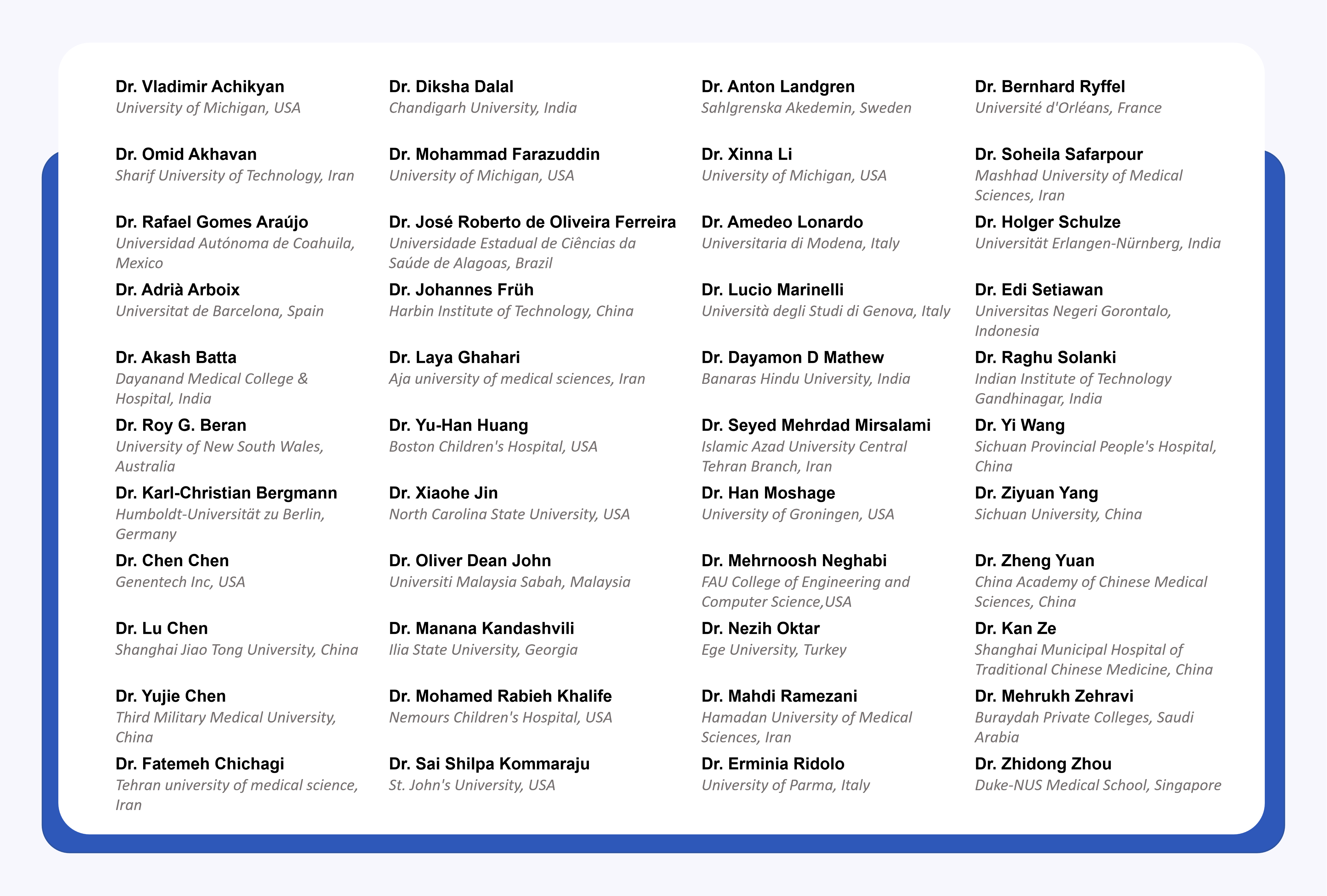
Figure 8. Reward-Eligible Reviewers
Note: Total points refer to the cumulative point balance recorded in the ARES system as of December 31, 2025. Any points successfully redeemed prior to this date have been automatically deducted from the total balance by the system.
Recognition and Rewards in 2025
In line with the established reviewer recognition framework, nine reviewers successfully redeemed accumulated points through the ARES system in 2025, converting their points into cash rewards.
Starting in late October 2025, reviewers who completed peer review assignments for journals published by Open Exploration through the ARES system became eligible for a 20% article processing charge (APC) discount provided by the publisher. The discount is automatically linked to the reviewer’s submission account and applies to Open Exploration journals that charge publication fees.
ARES appreciates the contributions of all reviewers whose participation supported peer review activities across journals in 2025 and will continue refining its recognition and reward approaches to encourage sustained engagement within the reviewer community.
Conclusion
In 2025, ARES continued to support stable and standardized peer review operations across participating journals through ongoing system optimization and improved reviewer management.
We sincerely thank all reviewers who participated in peer review through ARES, as their contributions are essential to maintaining a fair and rigorous publication process.
Looking ahead, we will continue to welcome more reviewers to join the ARES community and remain committed to further improving system workflows, user experience, and overall reviewer support.
Best Regards,
The ARES System
Information Inquiries: info@aressystem.com
Cooperation Inquiries: cooperation@aressystem.com